Key Takeaways
- An aesthetic office chair merges visual elegance with functional design for creative professionals.
- Global ergonomic seating demand expands rapidly as workplaces prioritize employee wellness.
- Critical features like lumbar support and mesh protect against back pain without disrupting clean lines.
- Harmonious room coordination requires matching seating materials and colors directly with your desk.
Introduction
Let’s be honest for a second. When you are sitting down to design, write, sketch, or code for hours on end, the last thing you want is a clunky black plastic box of a seat ruining your entire creative vibe. There is a rapidly growing interest in office chairs that combine visual appeal with comfort and functionality. Creative professionals often want an office chair that complements their workspace while still providing proper support for long working hours. Your workspace is practically an extension of your mind. If it looks uninspired, well, creativity tends to flatline.
Choosing a visually striking aesthetic office chair can completely change how you feel when you step into your room each morning. But looks aren’t everything, right? If your lower back is screaming by 3:00 PM, that gorgeous velvet number isn’t doing you any favors. This article will cover important ergonomic features, different aesthetic styles, and tips for choosing an aesthetic office chair for a creative office.
What Makes an Office Chair Aesthetic?
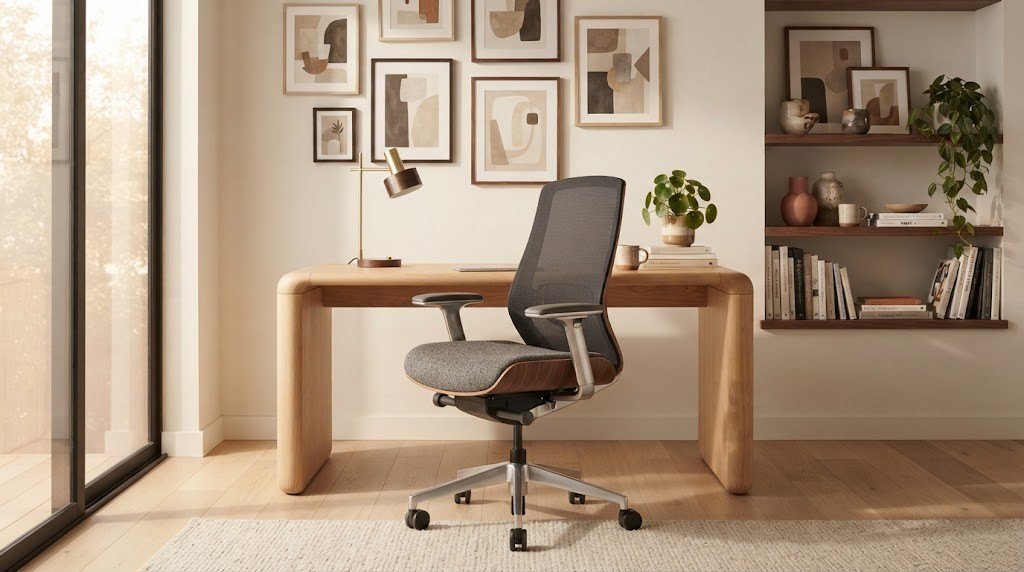
What defines the visual charm of furniture pieces? Fundamentally, it involves appearance, colors, materials, forms, and general design. You notice these things because they pop without looking weird, giving off a vibe of total common sense.
Aesthetics can vary depending on the style of the workspace, such as minimalist, modern, contemporary, or creative. What works in a stark, gallery-like studio might look entirely wrong in a warm, plant-filled reading nook. Still, looks matter just as much as comfort and how well something works. A gorgeous shape falls flat if the padding caves in after seven days or the structure wobbles.
Popular Styles of Aesthetic Office Chairs
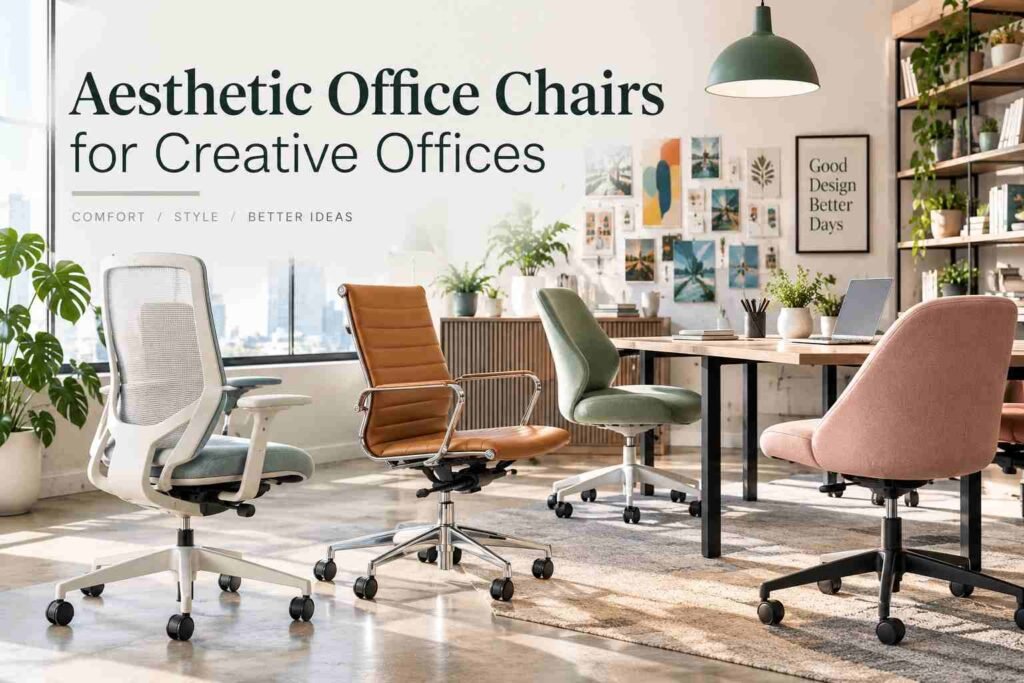
Creative spaces require matching visual flavors. When selecting an office chair, options suitable for creative offices span minimalist, modern, Scandinavian-inspired, contemporary, or executive designs.
Various office interiors match different chair formats. Take a bright studio, where a clean, light-wood Scandinavian piece featuring soft fabric upholstery adds warmth. Similarly, a sleek mid-century modern shape with rich contours can center a moody, focused writing den. It is all about matching the architectural rhythm of your room.
Colors and Materials That Enhance a Creative Workspace
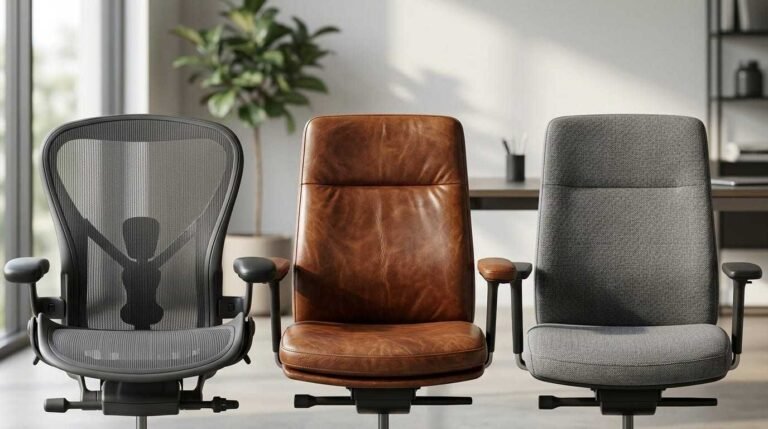
Materials do heavy lifting when it comes to visual texture. The look of a seat is shaped by various elements like colors, fabrics, mesh, leather or faux leather, and other finishes.
You can pick options that match your current desk and room decor. If your space uses exposed concrete and matte black steel, a massive traditional mahogany seat sticks out awkwardly. Pairing that layout with breathable grey mesh or textured charcoal cloth achieves a balanced, deliberate vibe instead.
Why Ergonomics Still Matters in an Aesthetic Office Chair
Some folks assume beauty and utility live on opposite ends of the universe. Not true. An attractive chair should also provide appropriate support for people who spend long hours working.
Aesthetics and ergonomics do not have to be separate priorities. Modern manufacturing proves you can have sleek curves and advanced spine-saving mechanisms all in one package. Market insights from 2026 indicate that the global ergonomic chair sector continues its steady climb past 12 billion USD as more creators realize health and beauty can coexist in a single workstation.
Understanding Lumbar Support for Long Hours
Let us talk about your lower back. The true purpose of lumbar support is filling that natural hollow in your lower back to help you maintain a comfortable posture. Leave it out, and you naturally start to slump, your pelvis rolls backward, and tiredness sets in right away.
Adjustable lumbar support lets people customize their physical setup, guaranteeing that pressure hits the exact spot where the spine arches. This feature is essential when you are locked deep into a project for hours on end.
Adjustable Features for Everyday Comfort
A truly functional seat cannot be one-size-fits-all. Useful features such as seat height, armrests, backrest adjustment, seat depth, and tilt or recline functions make a massive daily difference.
Adjustability helps people set up a much more comfortable posture for getting things done. Once your feet rest flat on the floor, your elbows bend at a 90-degree angle, and your back gets proper support, putting in long hours feels way less draining.
How to Choose an Aesthetic Office Chair for a Creative Office
Ordering seating online without a plan usually leads to disappointment. You need a solid method for weighing different options against your actual room requirements, personal tastes, and daily routine.
Beyond nailing down your basic physical needs, shopping with a clear strategy keeps you from landing an expensive impulse purchase that ruins your room’s setup. A deliberate decision-making process weighs how room dimensions, lighting, and layout flow interact with your final seating pick.
Match the Chair to Your Office Style
Making sure the chair’s lines, colors, and materials play nice with your desk, lighting, walls, and other furniture is vital if you want a room that actually looks put together.
Alternative chair styles fit right into unique creative office setups. Take a graphic designer working out of an open loft space, who might opt for a striking, sculptural task chair, compared to an illustrator in a cozy nook who might go for a fabric-wrapped shell chair with warm wooden legs instead.
Consider Your Daily Work Habits
Be real with yourself about how your actual workday goes. Map out how many hours you are glued to your seat, if you are constantly getting up to stretch, and what kind of tasks you are grinding through.
Those little daily habits are everything when it comes to figuring out what features you actually need. If you shift positions constantly to sketch on paper before jumping back to a digital screen, a responsive tilt mechanism and flexible armrests are non-negotiable.
Aesthetic Office Chair Ideas for Creative Workspaces
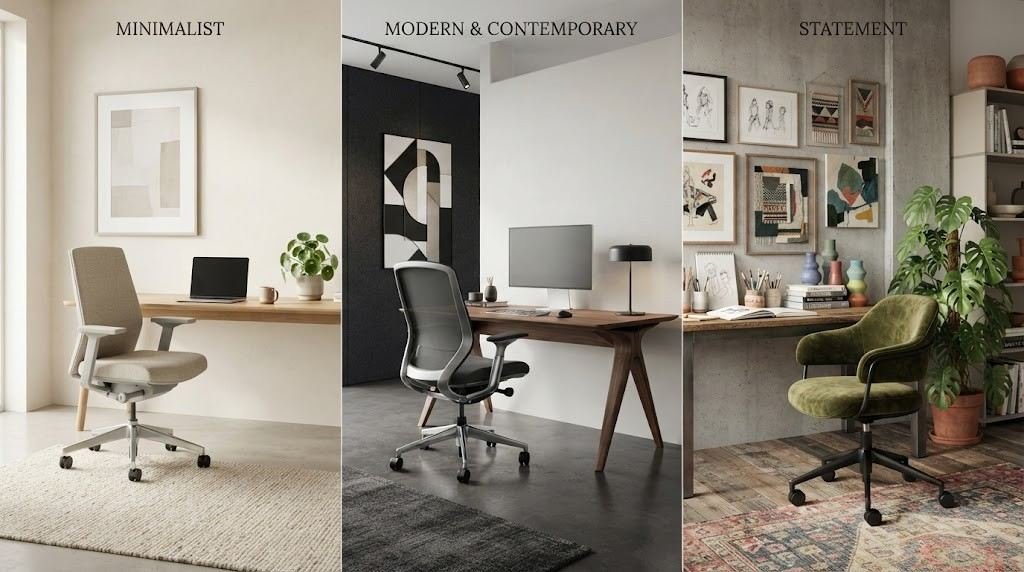
Let us explore some design directions. Finding the right visual direction for your studio can sometimes feel overwhelming given the sheer number of options available on the market today.
Examples of chair styles and design approaches that can work well in creative offices include pieces that focus on the characteristics readers should look for rather than making unsupported claims about specific products.
Minimalist Aesthetic Office Chairs
You’re looking at straight lines, basic shapes, neutral colors, and low-key designs. Minimalist seating fits right into clean creative spaces when you want the room to breathe. They avoid visual clutter while offering reliable daily utility.
Modern and Contemporary Office Chairs
This style covers chairs built with standout silhouettes, up-to-date materials, and sleek details. They easily double as a statement piece in your studio, catching the eye and adding some genuine artistic personality without feeling obnoxious.
Statement Office Chairs for Creative Spaces
Every now and then, you want a room to actually have some soul. That is where chairs with punchy colors, wild silhouettes, or unusual materials come in handy. A standout chair injects real personality into the space while still letting you get actual work done, feeling pretty much like a piece of functional art parked right in your studio.
Creating a Stylish and Comfortable Creative Office
Your seating choice is just one actor on the stage. Let us expand beyond the chair and explain how the chair can work as part of the overall office design.
Pairing Your Chair With the Right Desk
Matching proportions, colors, materials, and overall design between the chair and desk creates visual harmony. A delicate mid-century desk will look crushed beneath a massive, over-padded executive behemoth. Keep the scale balanced.
Building a Cohesive Workspace
Throwing a decent seat into a room with harsh overhead bulbs and random junk everywhere means it is still going to look bad. You have to care about the lamps you pick, where you stash your stuff, what you put on the walls, and whether you have any plants keeping you company. Put together a workspace that shows your personal style. Once the setup feels put together, your creative output follows.
Setting up an office takes a lot of trial and error instead of just getting done in a single afternoon. You spend weeks trying to figure out how to balance physical comfort with your own personal taste. Once you finally commit to choosing your seating carefully, coordinating your materials, and building your desk around items you actually enjoy looking at, your entire daily workflow transforms. You stop fighting the room and start working right alongside it, which turns those marathon sessions into something much lighter and infinitely more inspiring.