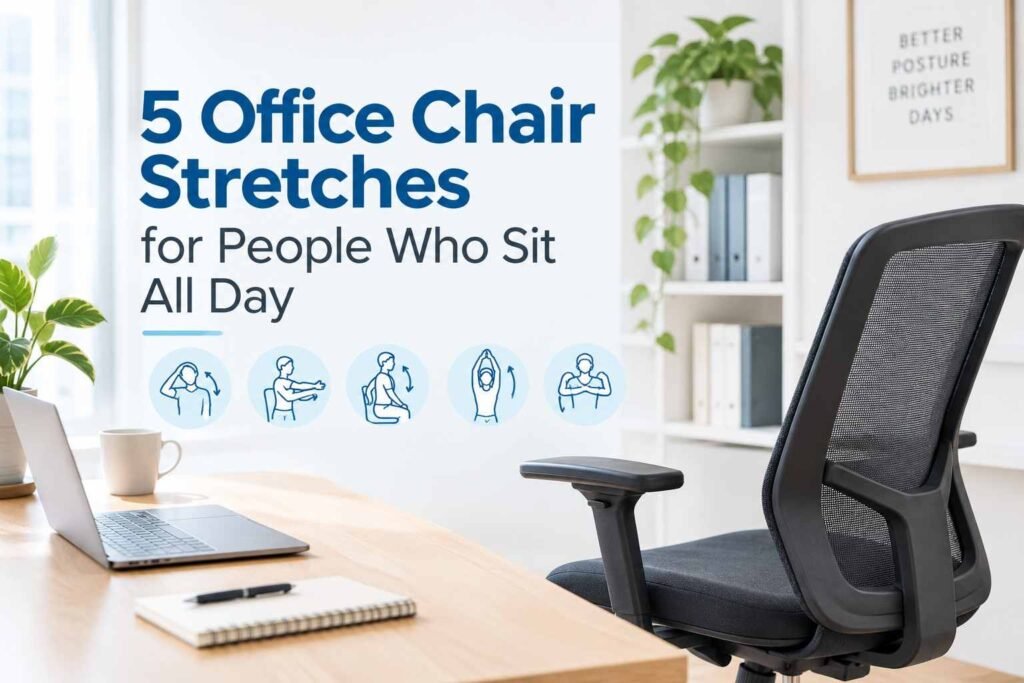
Key Takeaways
- A few intentional minutes of movement entirely reset the physical baseline after hours of desk work.
- Simple desk routines target chronic pressure spots, keeping the neck, back, and hips from locking up under fluorescent lights.
- Pairing regular body resets with supportive seating creates a workspace that actually works with human anatomy instead of against it.
- Consistent micro-breaks throughout the day provide an easy way to maintain flexibility without requiring lengthy, exhausting workout sessions.
Introduction
Rigidity and aches develop very quickly whenever your schedule is packed with continuous computer tasks and zero breaks. With your joints completely frozen from immobility, you find yourself feeling totally worn out and sluggish by the time afternoon hits. Desk workers can easily fight back against this fatigue with simple office chair stretches.
Locking down effective office chair stretches that work with a busy calendar completely transforms your workday. This walkthrough highlights movements performed right next to an office chair, accompanied by guidance on forming a routine.
Why Office Chair Stretches Matter
Before diving into specific movements, it helps to understand why our bodies protest so loudly after a few hours under fluorescent lights. What actually occurs internally when you stay chained to your workstation deserves a closer look.
How Sitting All Day Affects Your Body
You will develop quick physical stiffness and muscle tension in your neck, shoulders, back, hips, and legs from sitting too long. Your glutes deactivate and hip flexors tighten whenever you remain anchored in your seat.
Overall workday mobility suffers when you hold a single posture for long blocks of time. Blood flow slows down, allowing minor muscular tightness to evolve into severe discomfort.
Restricted circulation from hours of remaining in a single position generates sluggish energy and heavy legs. This steady compounding of bodily stress is why regular shifts leave you feeling completely worn out despite barely moving.
Benefits of Stretching During the Workday
Enhancing your mobility and flexibility while interrupting long blocks of sedentary time is easily achieved through regular stretching. Short movement interludes integrate into a hectic workday much better than traditional, lengthy exercise blocks ever could. Moreover, a fast pause resets your focus and clears your thoughts.
These short interludes supply tense tissues with fresh oxygen without taking up significant time. This practice connects heavy career focus with overall physical health.
How Often Should You Stretch at Your Desk?
Staying limber requires zero disruption to your daily routine. Your blood circulation stays active simply by weaving short movement intervals into your day. Guard against sitting for hours on end without altering your posture or moving your body. A quiet hourly reminder alarm can prompt you to stand up regularly.
Cultivating a dependable habit stops stiffness from becoming a permanent fixture. When countering the steady pull of a typical workstation, maintaining consistency matters significantly more than pushing for high intensity.
5 Simple Office Chair Stretches
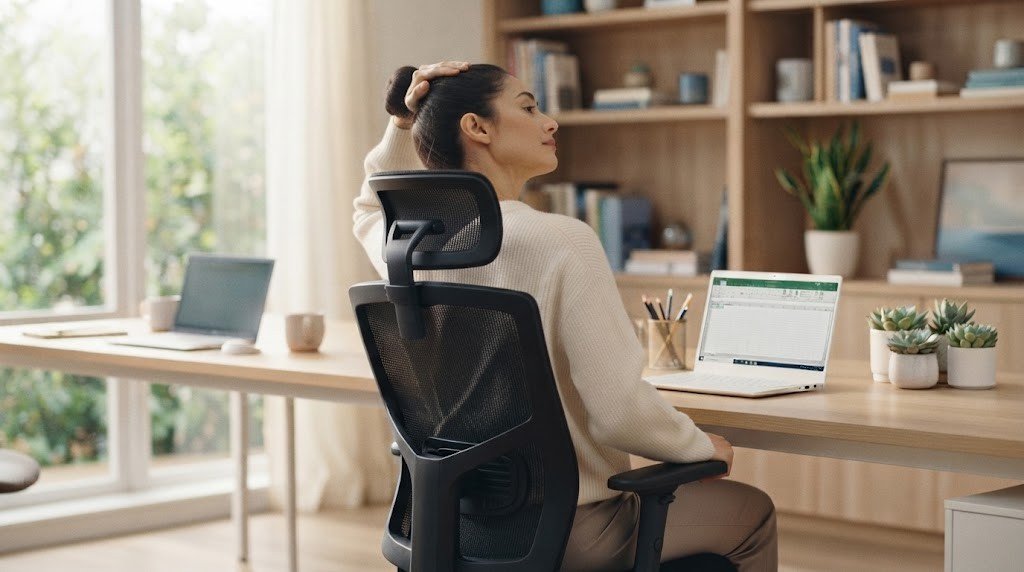
Physical stiffness and discomfort set in fast when your day consists of prolonged, unbroken desk tasks. Uninterrupted screen time seizes up your joints, making you feel completely worn out and sluggish before the afternoon is over. Simple office chair stretches give desk workers a fast way to inject movement back into their shift.
Locking down effective office chair stretches that work alongside a busy schedule makes a massive difference. This walkthrough showcases practical stretches meant for an office chair, accompanied by guidance on forming a reliable routine.
1. Neck and Shoulder Stretch
Dissolve upper body stress directly at your workstation through a calm stretch for your neck and shoulders. Posture should remain tall as you lower your right ear toward your shoulder and breathe steadily. Ensure the movement stays comfortable and never forced. Hold for 20 seconds before you switch over to the other side.
2. Seated Upper Back Stretch
Show a simple seated movement that targets tension around the upper back and shoulders. Clasp your hands together right in front of your chest, push your palms out away from your body, and gently round your upper back. Keep the movement completely disciplined and steady. You will instantly feel a release of tightness spanning across your shoulder blades.
3. Seated Spinal Twist
When your spine feels locked up, a simple torso rotation works wonders. Keep your feet flat on the floor. Reach your right hand back to grab the edge of your chair, then slowly look and turn your upper body to the right. Don’t force it past where it feels natural. Breathe through it for a few seconds, then switch sides.
4. Wrist and Finger Stretch
Anyone who spends hours typing or clicking a mouse will benefit greatly from giving their hands and wrists some attention. Reach your right arm straight out with your palm facing the ceiling. Grab your fingers with your left hand and gently pull them down toward the floor, holding them there for a moment. Adding these tiny movements for your fingers, hands, and wrists goes a long way toward staving off repetitive strain.
5. Seated Hamstring Stretch
If your legs feel stiff from sitting, scooch toward the front edge of your chair. Prop your right leg straight out with your heel on the floor and your toes pointing upward, then tip forward slightly from the hips. Take it easy and stay well within a comfortable range of motion.
How Office Chair Stretches Support Better Posture
Stretching by itself isn’t a silver bullet for poor posture. If you wrap up a stretch only to sink right back into a terrible slouch, your body is going to tighten right back up. Developing truly comfortable routines at work means pairing physical movement with a clear focus on your seating position.
Spending your whole day bent over spreadsheets trains your body to treat that slumped posture as normal. Weaving focused routines into your day pushes back against that constant downward pull. Giving your chest room to open, easing tight hips, and aligning your back build a body awareness that carries right over to your workspace. This moves well past just stretching short fibers; it is about resetting your internal compass for neutral posture. When combined with intentional micro-adjustments throughout your tasks, these intentional pauses prevent your frame from locking into chronic rigidity.
How to Create a Desk Stretching Routine
Getting into a stretching habit isn’t that complicated. Find a basic way to fit some movement into your daily schedule. Keeping the routine grounded ensures it stays easy to manage during a busy workday. Link your stretch breaks to natural cues, like right after sending a major project or before checking morning emails.
Take Regular Movement Breaks
Stand up, walk around, or shift positions throughout the day. Stretching is meant to support regular movement, not take its place. A simple walk to grab a glass of water works wonders for your blood flow.
Walking away from your desk breaks up your physical momentum and gives tired muscles a much-needed break. Even just taking twenty seconds to stand up straight and roll your shoulders back helps you escape that heavy, stuck feeling of sitting all day.
Combine Stretches With Good Sitting Posture
A suitable sitting position can work alongside regular stretching. Keep your feet resting flat, your shoulders loose, and your screens placed right where you need them. Dialing in your workspace to match your physical needs makes a massive difference in how you feel.
Getting your seated alignment right ensures the relief from your stretches lasts rather than vanishing the moment you slouch back down. When your spine has solid support, your muscles don’t have to strain themselves all day just to hold you up.
Choose an Office Chair That Supports Comfortable Sitting
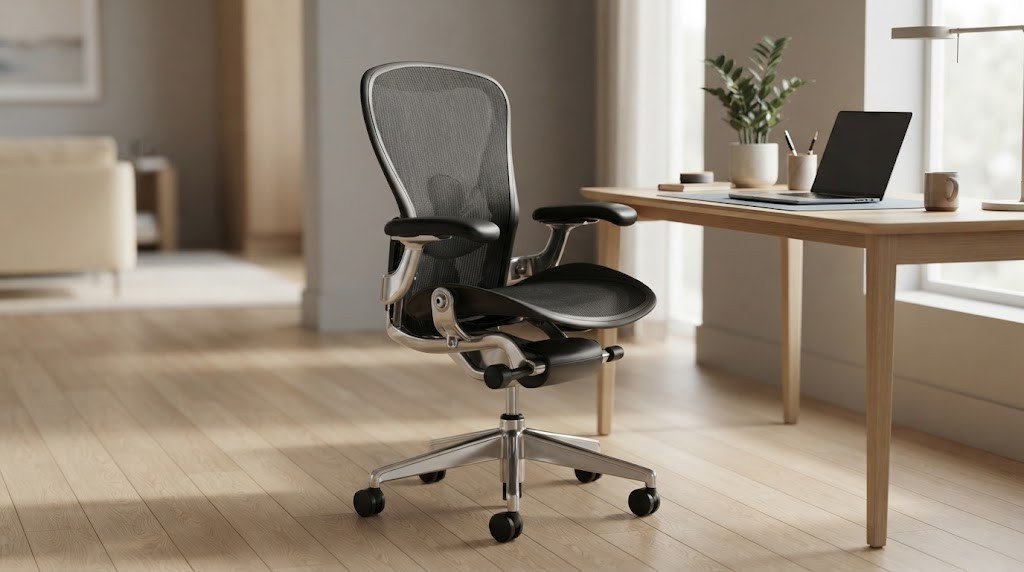
Transition naturally from stretching to the role an office chair can play in creating a more comfortable workspace. Stretching and movement are important, but appropriate chair support can also contribute to a better desk setup. After all, even the best routine cannot fully rescue you from a rigid, unsupportive seat.
Why Ergonomic Chair Support Matters
Ergonomic chairs exist mostly to make sitting a lot more comfortable. They aren’t going to prevent or cure back pain by themselves. A well-built chair just helps you match your natural shape so you don’t fight your desk all day.
Features to Look for in an Office Chair
If you are tired of fighting your furniture, check the actual mechanics before buying. Make sure you can easily tweak the adjustable seat height, shift your armrests, slide the seat depth, and lock in solid lumbar support and backrest support. You want full adjustability with intuitive controls that let you customize your setup without fuss. That is the exact problem NuLife Chairs was built to solve.
You can’t just wish your way into a better workday. Taking real movement breaks and getting your physical space sorted out makes a massive difference in how you feel by three o’clock. Throwing a proper chair from NuLife Chairs into the mix ensures that comfort isn’t just a lucky accident, letting you actually get through your tasks without constantly shifting around trying to get comfortable.