Key Takeaways
- Prolonged static sitting drops lower-leg blood flow to about 61% of baseline, highlighting why smart ergonomic features are necessary for your circulation.
- A sloping waterfall seat edge paired with adjustable seat depth prevents direct mechanical pressure behind the knees and keeps blood flowing freely.
- Mixing active routines, back recline mechanisms, and foot support stops tissue fluid pooling in your legs.
- Choosing the right chair dimensions based on your physical build and daily habits guarantees lasting ergonomic wellness.
Introduction
Extended sitting ruins lower-body health. Planted in a standard desk chair for hours, blood flow drops to your legs. Swelling, numbness, and exhaustion follow fast. Upgrading your workspace solves this. An ergonomic office chair reduces thigh pressure, fixes your sitting posture, and supports your lower body.
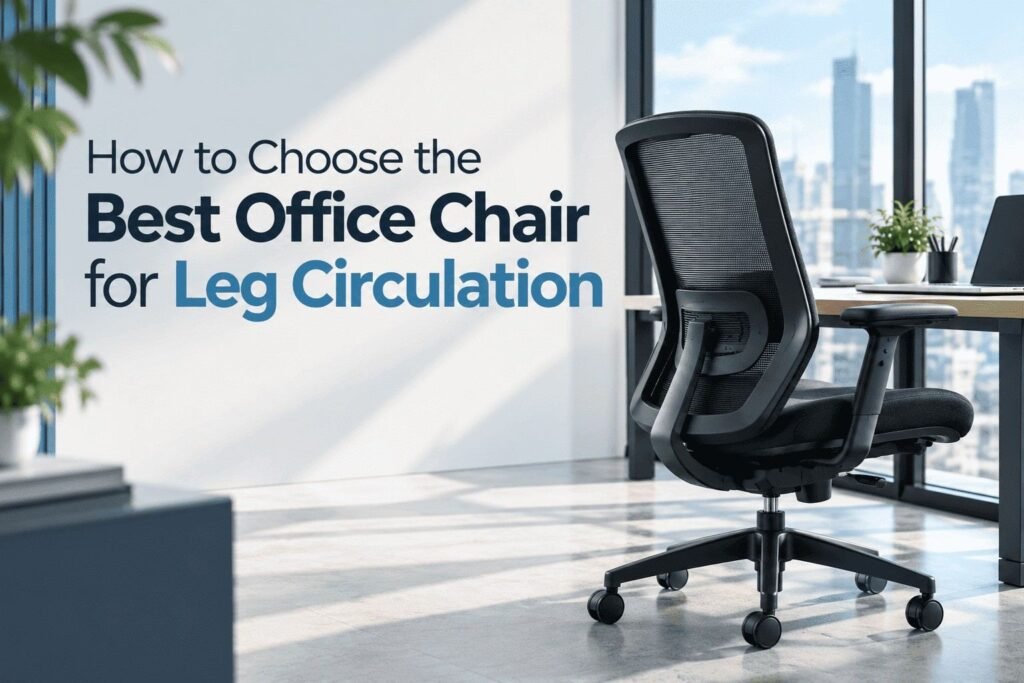
What turns a seat into a lower-body health tool? The best office chair for leg circulation is an adjustable, ergonomic build crafted to lessen pressure under thighs and behind knees while fluids stay in motion. Picking a proper seat depends on grasping which design traits preserve circulation.
Why Leg Circulation Matters When Choosing an Office Chair
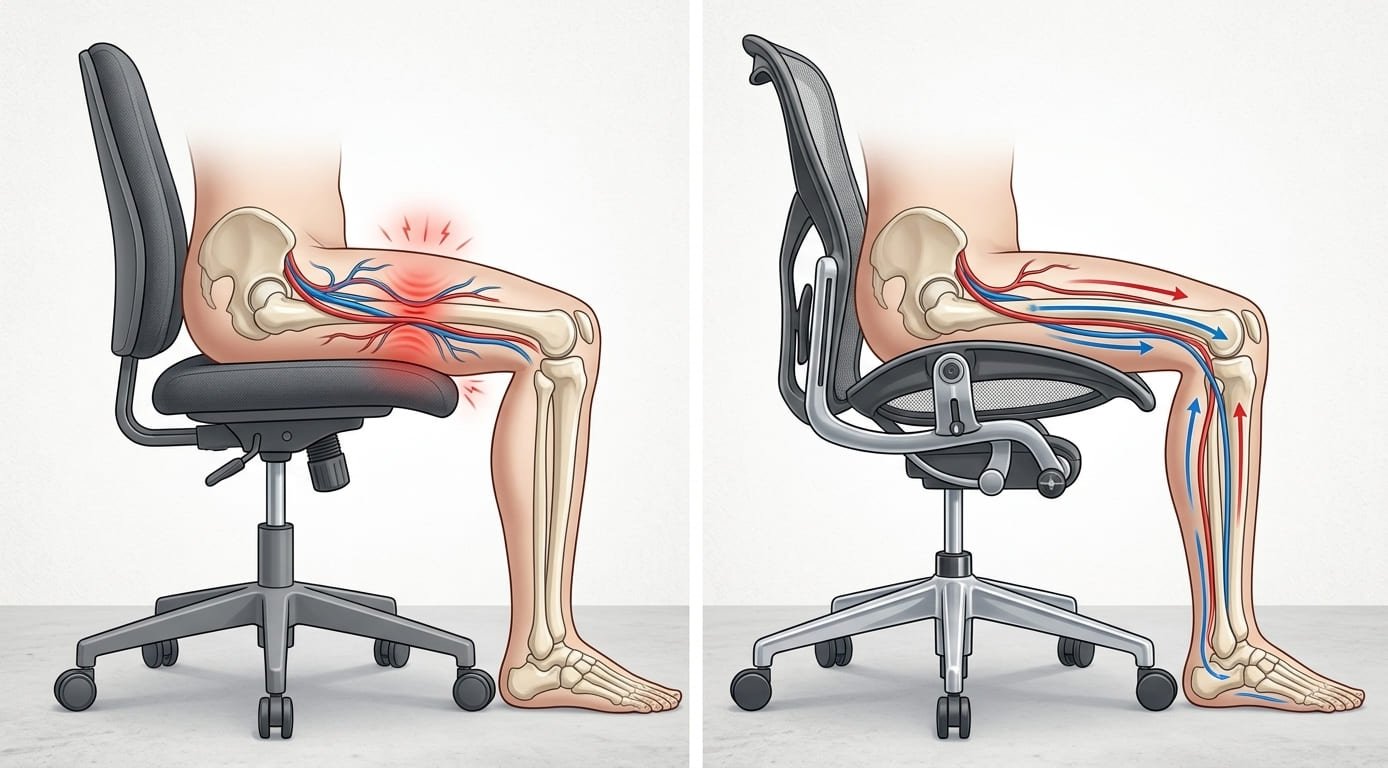
Healthy circulation requires open blood pathways, yet regular seats feature rigid front edges that squeeze vessels and fatigue muscles. Proper ergonomic adjustments distribute weight to support the best office chair for leg circulation.
How Prolonged Sitting Affects Blood Flow
Sitting deactivates muscles, stopping the calf pump while torso weight presses down. This squeezes vessels, dropping arterial leg blood flow to roughly 61% of baseline. Slouching worsens this by straining lower tissues.
Common Signs of Poor Leg Circulation
How can you tell if your desk setup restricts your lower limbs? Look for these signs:
- Numbness and Pins-and-Needles: Toe prickling from pinched nerves.
- Visible Leg Swelling: Fluid pooling from stationary tasks.
- Lower Limb Stiffness: Joint tightness upon standing.
- Heavy Leg Fatigue: Sluggish movement from aching limbs.
- Cold Feet: Chilly toes stemming from limited arterial flow in warm settings.
Features to Look for in the Best Office Chair for Leg Circulation
To keep blood flowing well, your seat must adjust to your frame instead of forcing poor postures. Good workplace ergonomics centers on easing pressure and driving movement, rendering specific features crucial for a replacement chair.
Adjustable Seat Height
Setting your seat height correctly prevents restricted blood flow, as seats that are too high press your upper body weight onto your thighs, while seats that are too low tilt your pelvis and lift your knees. An adjustable pneumatic lift allows your feet to rest totally flat on the floor, forming a 90° to 100° knee angle that keeps your thighs parallel to the ground for smooth vascular delivery.
Waterfall Seat Edge
Take a close look at the front edge of any seat pan you consider. A flat or hard-angled cushion edge digs straight into the popliteal artery and sciatic nerve running behind your knees. A proper waterfall seat design features a gentle downward slope at the front of the cushion. This rounded contour redistributes pressure away from delicate posterior knee tissues, allowing vascular and lymphatic fluid to circulate freely all the way down to your toes.
Appropriate Seat Depth and Chair Size
Seat depth equals height in importance. Overly deep pans press into knees, and shallow pans leave thighs unsupported. Opt for adjustable models to maintain a 2- to 3-inch gap between the cushion edge and your knees, securing your back.
Ergonomic Lumbar Support
Leg circulation depends heavily on your lower back. When a person sits with a flat spine, the pelvis twists backward, pulling hamstrings tight and driving thighs flat into cushions. An adjustable ergonomic backrest fixes this mess by supporting the lower curve and keeping the pelvis locked neutral.
Reclining Backrest
Locked at 90°? Your spinal pressure spikes. Instead, a dynamic recline between 100° and 110° moves torso weight away from your lower limbs. Add tiny workday shifts. They flex your hips, dodge stiffness, and keep your microvascular system ticking.
Breathable Seat Materials
Seat materials shape lower-body comfort in ways many overlook. Synthetic leather and cheap vinyl trap heat and dampness, causing poor posture. Stay cool and properly supported by opting for breathable mesh, molded high-density foam, or soft fabric upholstery.
How to Choose the Right Office Chair for Your Needs
No single office seating solution fits every body type or work routine. To get the maximum benefit for your money, you must match specific chair features to your personal physical metrics and daily tasks.
Match the Chair to Your Height and Build
Buying a chair sized for a taller person will wreck leg circulation if you’re shorter, leaving your feet dangling or your knees pinched. On the flip side, tall workers need extra seat depth and higher lifts just to support their thighs. Always verify the weight capacity and specs first.
Choose the Right Cushioning
Don’t fall for ultra-plush cushions. They feel great for about five minutes before compressing completely, slamming your sit bones against the hard plastic pan. High-density molded foam or tight mesh handles things differently. It disperses your weight properly, keeping pressure off your lower legs without losing form.
Consider Daily Sitting Time
A brief 2-3 hour shift can get by with standard height adjustments. Tackling long hours requires specialized ergonomic seating and adjustable elements to handle prolonged sitting. Heavy-duty ergonomic chairs keep your cushion firm and ensure total durability.
Look for Easy-to-Use Adjustments
Hidden, stiff levers under a seat pan usually get totally neglected. Find a chair with smart, accessible controls so you can shift your seating position on a whim. Smooth-tension knobs and simple height levers make it effortless to keep up proper circulation throughout the workday.
Sitting Habits That Improve Leg Circulation
Even the best office chair for leg circulation isn’t going to fix everything by itself. You’ve got to back up that ergonomic setup with actual physical movement if you want your blood flow to stay normal.
Maintain Proper Sitting Posture
Dialing in your workstation posture isn’t hard, provided you start with your feet. Ground them flat or place them on a tilted footrest, positioning your ankles slightly forward of your knees. Open your hip angles, recline backward lightly to activate your back support, and release your shoulders. That neutral alignment is what you need to improve your posture and keep your blood vessels flowing freely.
Take Regular Movement Breaks
Human bodies are meant to move around, not stay completely frozen for hours. Make it a daily ritual to break up your sitting posture blocks every half hour to an hour. Get on your feet, walk across the room, or pace during a quick check-in. Doing some regular movement squeezes your calf muscles, driving trapped blood upward and rapidly reducing excess tissue fluid.
Stretch Your Legs Throughout the Day
Keeping your blood flowing efficiently doesn’t require setting up a weird gym station at work. Honestly, doing small physical tweaks right at your desk does the trick:
- Start ankle circles by picking up one foot, rotating the joint clockwise 10 times, and reversing for 10 counterclockwise turns to activate the lower leg effortlessly.
- Execute seated calf raises by planting your toes flat on the ground, driving your heels up as far as they go, and contracting your calves for a couple of seconds.
- Try hamstring lengtheners by pushing one leg forward with the heel touching the floor and hinging at your waist until a mild stretch reaches your thigh.
Consider a Footrest if Needed
If a fixed desk forces you into a bad typing posture whenever you lower your chair, it is time to set up an ergonomic footrest. Bringing in a firm footrest lifts your soles so they have a solid landing spot instead of hanging loose. This change instantly relieves tension under your thighs, holds swelling at bay, and keeps your lower-body vascular channels clear.
Common Mistakes That Can Reduce Leg Circulation
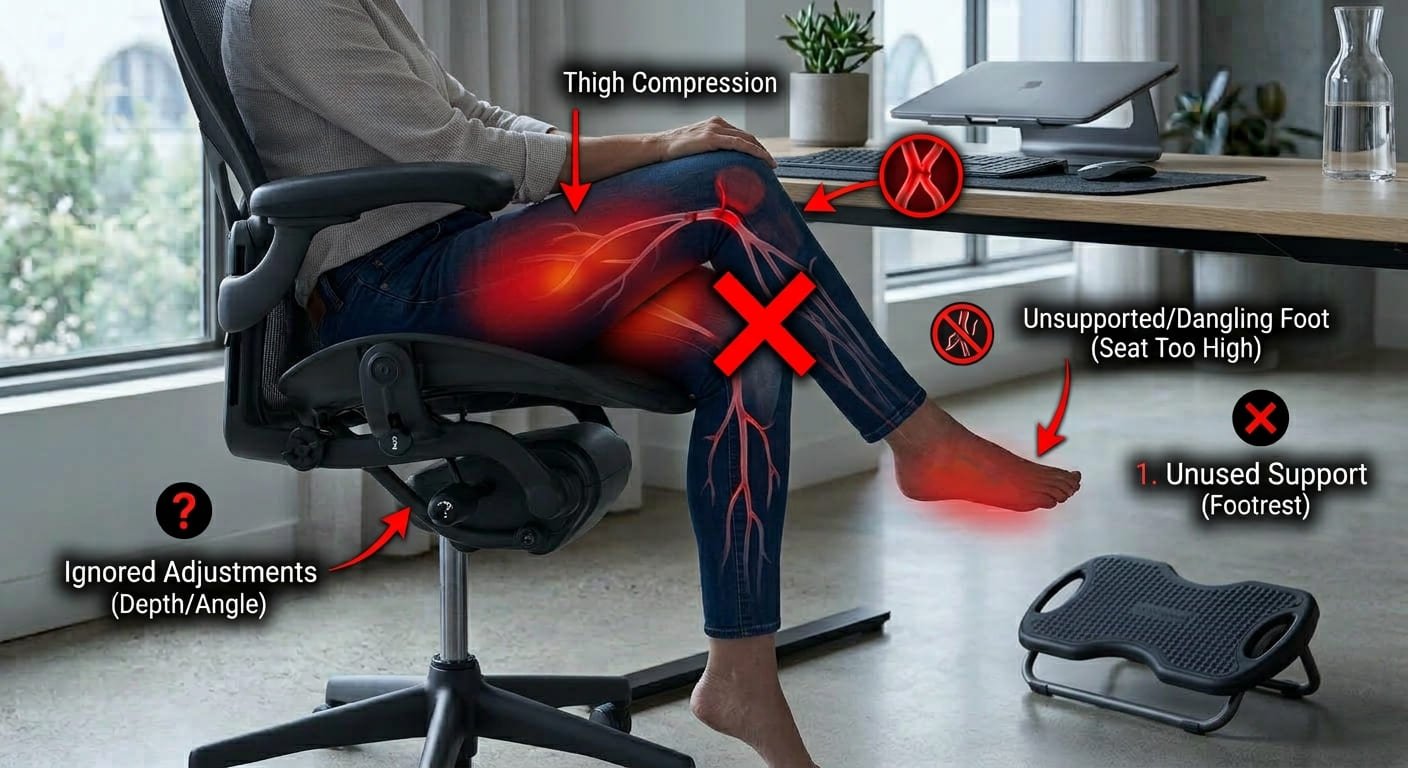
Sometimes, small setup errors ruin the benefits of an expensive ergonomic chair. Avoiding these common mistakes keeps your legs feeling light and energetic.
Sitting Too High or Too Low
Setting your chair height purely by feel without checking your leg geometry creates immediate vascular issues. Climbing too high in your seat leaves your lower body hanging, causing brutal thigh compression. Alternatively, sinking too low drives your knees higher than your hips, tips your pelvis back, and restricts blood vessels around the gluteal fold. Always customize your chair so your feet touch the ground and your thighs stay parallel to the floor.
Crossing Your Legs for Long Periods
Crossing your legs at the knees or resting an ankle over your opposite knee feels comfortable temporarily, but it severely compromises lower body circulation. Stacking your legs blocks the primary knee vein. Internal pressure climbs. Vein strain increases. Rest both feet flat.
Remaining in One Position for Hours
Even a perfectly fitted, $1,000 ergonomic chair will cause physical fatigue if you remain totally frozen in it for 4 hours straight. Static posture leads to fluid pooling and muscle stiffness regardless of cushion quality. Shift your position slightly every 15 minutes, utilize your chair’s tilt lock features, and stand up frequently.
Ignoring Chair Adjustments
Many people unbox a new office chair, leave all the factory adjustment knobs untouched, and then wonder why they still suffer from lingering leg pain or back pain. Spend 10 minutes tweaking seat depth, lumbar firmness, and arm heights. Customizing your fit delivers true comfort.
Choosing the Best Office Chair for Long-Term Comfort and Leg Support
Finding the right chair is a vital investment in your everyday stamina and physical longevity. Focus on designs that blend waterfall edges, adjustable depth, gas-lift height, and smooth recline.
Such features drop pressure points, protect your posture, and maintain free blood flow through your legs. Combine this setup with consistent routines like desk stretches and water intake to secure a comfortable environment.
Conclusion
Promoting healthy leg circulation at your desk comes down to selecting builds that wipe out contact pressure and keep your lower body mobile. Integrating a waterfall seat front with precise depth controls and responsive lumbar support transforms a basic chair into an actual health asset.
Naturally, no seat works magic all by itself. Matching your new furniture with proper posture, mini walking breaks, and light desk stretches creates the ultimate long-term defense against strain. Upgrade your setup, stay moving, and conquer leg fatigue for good!