Key Takeaways
- Upholstery choices control key practical details, including thermal airflow, seat padding, and how hard a chair is to clean.
- No single material fits every office environment, making it vital to choose based on local weather, sitting duration, and upkeep willingness.
- Solid choices blend your exact comfort and budget needs with durable upholstery supported by tough mechanical hardware underneath.
- Understanding component builds alongside fabric selection ensures long-term ergonomic support and value.
Introduction
Workspaces that remain productive and free of physical discomfort depend heavily on office chair materials. Because sitting through long hours puts continuous pressure on your body, your surface choice influences daily energy and comfort. Everyday performance changes completely whether you pick mesh, fabric, leather, faux leather, or vinyl. Room climate, daily habits, and cleanup preferences all play a massive part here.
Finding the best office chair takes a clear look at how these choices stack up for your personal setup.
Understanding Office Chair Materials
Office chair materials refer to the physical substances making up the primary touchpoints and structural framework of a seat.
A chair’s padding, fabric cover, back structure, and outer finish dictate daily comfort, cleanup effort, and lifetime wear. Shoppers rarely look past aesthetics, usually picking furniture based on color scheme or a nice outline.
But the actual components dictate how long the product survives daily use. Selecting the right office chair material prevents premature wear and physical discomfort.
Common Types of Office Chair Materials
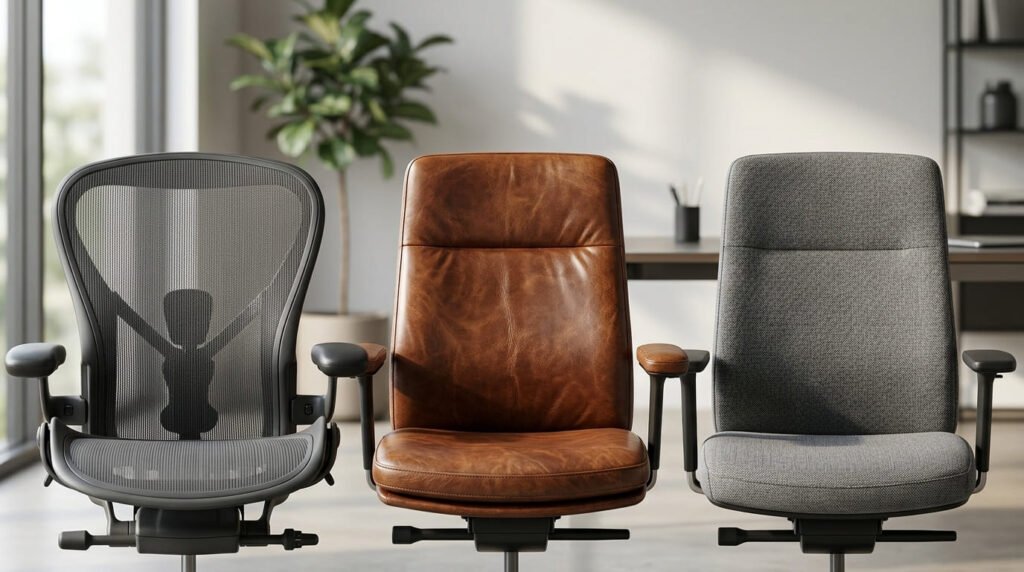
Common types of office chair materials center on mesh, woven fabric, genuine leather, faux leather, and vinyl. Every single option shifts expectations regarding wear, upkeep routines, and workspace performance.
Mesh
Built from synthetic fibers stretched into an open weave, mesh gets used on backrests and sometimes entire seats. By encouraging steady air movement, this material prevents sweat and trapped warmth during long work shifts in warm spaces. Budget mesh tends to lose its stretch, fray at the seams, or drop over time. Keeping it in top shape takes little more than light dusting and immediate stain wiping, ideal for modern office and home setups.
Fabric
A soft, deeply cushioned seat usually comes down to blending synthetics like polyester into cotton, microfiber, or wool. Polyester keeps things affordable in warmer settings, while wool-heavy blends trap warmth for cold office environments. Because woven fibers absorb spills fast, maintaining them requires regular vacuuming and prompt spot treatments. Creative, comfortable environments prefer this style.
Genuine Leather
Real leather delivers an upscale executive aura that transforms room prestige immediately. Its surface naturally forms a rich patina over the years, reliably surviving over a decade with proper care. Even so, it requires a higher budget, lacks the open ventilation of mesh, and needs routine conditioning so it will not dry out or crack. Executive suites and corporate boardrooms benefit most from this setup.
Faux Leather (PU Leather)
Polyurethane (PU) leather gives buyers an accessible way to get a leather aesthetic without high costs. Scuffs wipe away much easier than from fabric surfaces, requiring minimal daily maintenance. It will not match real leather’s exact texture, but quality PU offers budget buyers a durable, sharp choice.
Vinyl
Vinyl acts as a practical budget substitute meant to resemble leather. Repelling liquid spills and stains makes sanitizing quick in commercial settings or high-traffic areas. However, cheaper variants can crack or peel down the line, and you don’t get any of the breathability of open mesh.
Office Chair Material Comparison
Evaluating office chair materials next to each other allows readers to rapidly weigh variations in comfort level, durability, airflow, care demands, aesthetic style, cost, and ideal settings prior to looking closer at each specific option.
| Material | Comfort | Durability | Breathability | Maintenance | Appearance | Price Range | Best For |
| Mesh | Medium to High | Medium | High | Low | Modern | Medium | Warm offices and tech hubs |
| Fabric | High | Medium to High | Low to Medium | Medium to High | Soft, Textured | Low to Medium | Creative teams and cooler spaces |
| Genuine Leather | High | High | Low | High | Luxurious | High | Executive boardrooms |
| Faux Leather (PU) | Medium | High | Low | Low | Sleek | Medium | High-use work areas |
| Vinyl | Medium | Medium | Low | Low | Accessible | Low | Commercial spaces and startups |
How Office Chair Materials Affect Comfort
Overall comfort comes down to ergonomics and your choice of office chair material. The material itself dictates breathability, padding depth, weight distribution, surface give, and how well heat escapes while sitting for long hours.
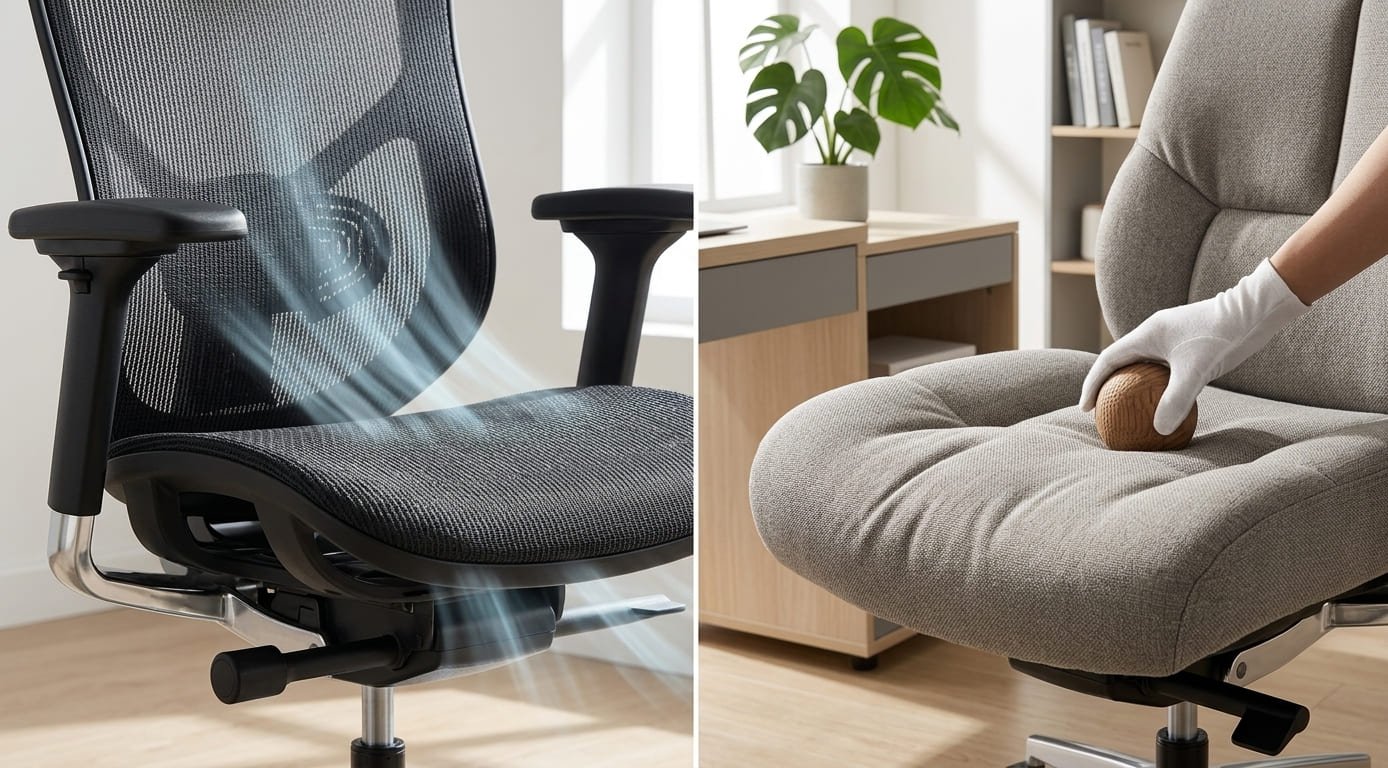
Breathability and Airflow
Airflow shifts drastically based on your upholstery choice. Mesh lets air pass right through, which makes a mesh chair ideal for warm environments. Woven fabric gives you decent ventilation, depending on how tight the threads are woven. In contrast, vinyl, faux leather, and real leather choke off air movement and hold onto body heat, which gets miserable over a long workday.
Cushioning and Pressure Distribution
Padding depth determines surface softness and pressure point relief. Fabric chairs and plush leather executive models give you thick, deep support to cushion your body. Mesh skips dense foam padding entirely, using springy suspension to spread weight evenly across the frame without bottoming out.
Temperature Regulation
Certain choices, like wool fabric or mesh, manage body heat remarkably well under different working conditions. Wool keeps you warm in cold spaces, while mesh prevents heat from accumulating when temperatures rise. Leather alongside synthetic choices traps heat instead, which increases the likelihood of sweating if your room lacks proper cooling.
Long-Term Sitting Comfort
Surviving extended desk work takes a comfortable office chair that keeps supporting your body hour after hour. High-airflow mesh and supportive fabric chairs cut down on daily exhaustion over long hours of daily use, protecting you from the strain caused by bad seating setups.
How Office Chair Materials Affect Durability
How long an office chair survives depends on a complete system, not just the outer material. You need to look at production standards, foam density, frame design, usage frequency, occupant weight, room atmosphere, and routine care.
Resistance to Daily Wear and Tear
Materials respond differently to physical stress. PU leather and metal-supported vinyl resist scratches and light abrasions well. High-strength mesh handles daily friction effortlessly as long as the weave retains its tension, while untreated fabric catches snags and absorbs spills fast. Genuine leather resists tears and physical stress with ease, though unshaded sun exposure will dry out the material and trigger surface cracks over time.
Expected Lifespan of Different Materials
In a regular office environment, high-grade leather and sturdy PU options comfortably reach ten-plus years of use. Regular fabric and mesh models generally deliver several years of reliable use, though cheap mesh can stretch, sag, or tear under heavy daily strain.
Material Quality vs. Build Quality
Good fabric never makes up for cheap seat foam or flimsy internal parts. A chair wrapped in fine leather will still break down fast if its steel mechanism, gas lift, or base gives out under pressure. Engineering strength counts every bit as much as surface feel.
How Office Chair Materials Affect Maintenance
Different chair covers demand completely different care routines. Taking time for simple maintenance protects your seating against early wear and keeps your workspace looking sharp.
Cleaning Mesh Chairs
Clearing dirt out of open mesh is easy if you vacuum the seat every week with a brush attachment. Pay attention to seat corners and backrest seams where particles gather. Sponge spot stains using warm water blended with mild soap, letting the surface air dry completely without soaking the mesh.
Cleaning Fabric Chairs
A fast vacuum run every week pulls hidden particles out of fabric seats. Applying a fabric shield beforehand stops liquids from creating permanent marks. Should a spill occur, press a dry cloth against the mess right away to pull liquid out of the cushion.
Cleaning Leather Chairs
Microfiber towels work best for removing weekly dust from genuine leather without causing surface friction. Treat the hide with a dedicated conditioner every few months to maintain flexibility and avoid surface splitting. Never scrub a wet spot on leather; just blot the liquid until it lifts.
Cleaning Faux Leather and Vinyl
To keep faux leather or vinyl clean, wipe down the finish using mild soap dissolved in warm water. Skip aggressive household cleaners entirely, because solvents like alcohol or bleach strip away synthetic topcoats.
Tips to Extend the Life of Office Chair Materials
- Consistent weekly cleaning stops grime from wearing down office chair materials prematurely.
- Spills require immediate attention before stains set into the weave or hide.
- Unshaded windows export UV rays that crack synthetic layers and fade fabrics.
- Stick to official care guidelines from the brand.
- Look out for early wear and keep frame fasteners tightened.
- Swap out worn casters or broken mechanisms early to protect the overall structure.
- Prevent early surface peeling by keeping seating out of direct heat and overly humid spaces.
How to Choose the Right Office Chair Material
Looks matter, but daily comfort depends on practical details. Look at sitting duration, local weather, maintenance expectations, budget limits, and workspace setup before buying.
Best Material for Long Hours of Sitting
When logging extended working hours, breathability and cushioning take center stage. Mesh chairs and thickly cushioned fabric chairs provide the ideal balance for all-day focus.
Best Material for Easy Maintenance
For places where spills happen daily, smooth surfaces win. Vinyl, PU leather, and hard plastics need almost zero effort to keep clean.
Best Material for Durability
Dense woven cloth and quality PU leather stand up to intense daily wear. Just make sure the internal hardware is equally tough.
Choosing the Best Office Chair Material for Your Needs
- Anyone logging long working hours needs either thick seat padding or a breathable mesh build.
- Choose mesh fabric in warm climates to stop heat and sweat from building up.
- Smooth vinyl or PU leather surfaces make easy cleaning a breeze where food and drinks are around.
- Real leather upholstery gives executive suites that classic premium appearance.
- If your chair faces heavy daily use, put your money into heavy-duty synthetic leather or commercial-grade cloth.
- Basic polyester upholstery or economical vinyl options suit budget-conscious buyers without breaking the bank.
Check the whole build alongside the outer material to secure true long-term comfort.
Conclusion
What covers your seat directly controls daily comfort, long-term wear, and required maintenance. No individual material suits every buyer; individual work environments, daily desk hours, budget constraints, and cleanup expectations differ across the board. A smart purchase requires looking at the full package to fit your routine.