Key Takeaways
- Hanging out at a desk all day doesn’t cause permanent damage, but it drains the strength right out of your glutes.
- Because your rear muscles go quiet, your body compensates poorly, triggering hip tightness and annoying lower back aches.
- Getting up, staying active, and tossing in quick bodyweight exercises like squats or glute bridges supply your lower limbs with vital movement.
- An ergonomic chair can’t do the muscle work for you, yet a properly adjusted seat takes direct stress away from your back and legs.
Introduction
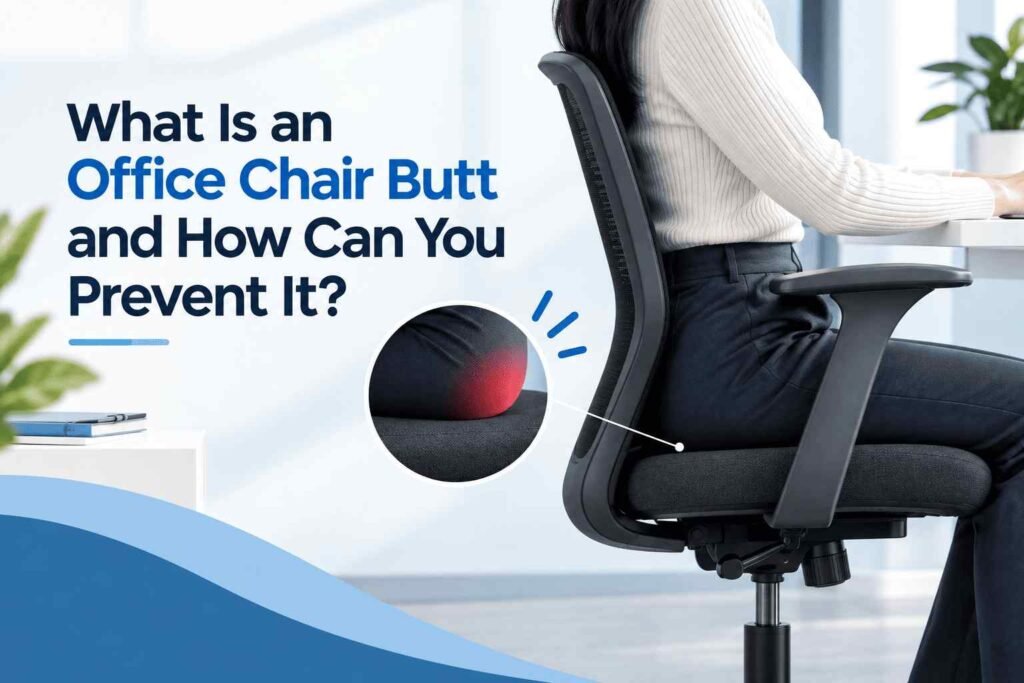
Ever stood up after a marathon desk session and felt like your rear end completely fell asleep? Millions of office workers know that stiff, numb feeling all too well. People often ask, what is office chair butt? It is an informal, popular catch-all phrase for the softening, weakening, or flattened appearance of your glutes after prolonged sitting.
In the medical world, what is office chair butt? Absolutely nothing! It is not a clinical diagnosis or a permanent shape change. But the stiff hips, lower back pain, and weak muscles are very real. The great news is that you can easily prevent office chair butt with regular movement, targeted glute exercises, better sitting posture, and a supportive ergonomic chair.
Understanding Office Chair Butt
As some of your anatomy’s biggest structures, the gluteus maximus, medius, and minimus propel you forward and hold your spine straight. Remaining seated for 8 to 10 hours daily forces those same muscles to deactivate and stay trapped under your body weight, triggering temporary weakness and diminished tone.
Plumping your seat down fails to permanently alter your physique or flatten tissue overnight, seeing as your overall activity, body composition, and genetics dictate your physical form. Long desk hours simply cause temporary muscle slackness that you can fix with regular movement.
Important Notice: Because “office chair butt” is merely a colloquial expression rather than a formal diagnosis, visit a medical specialist if you run into ongoing nerve pain or extreme numbness.
What Causes Office Chair Butt?
Understanding the primary cause of office chair butt helps you take control of your daily physical health. Several overlapping habits during your workday contribute to lower body weakness and discomfort.
Sitting for Long Periods
Spending several uninterrupted hours seated drastically reduces your natural lower-body movement. Remaining seated keeps your hip flexors contracted while your backside muscles remain elongated and idle. While parking yourself doesn’t instantly ruin muscle tissue, logging extended stretches without a pause tells your physique that those zones aren’t required, which triggers slow deconditioning.
Insufficient Exercise
When daily routines lack physical action, muscles fail to receive necessary stimulation. Abandoning routine strolls, weightlifting sessions, or leg exercises causes your glutes to steadily lose their power and tone.
Poor Sitting Posture
Slouching forward, leaning sideways, or crossing your legs for hours throws balance off. Sitting with an unbraced spine creates extra pressure around the hips and lower back. Bad alignment intensifies daily stiffness and joint strain, regardless of whether it acts as the lone trigger for visual muscle changes.
An Improperly Adjusted Office Chair
Using poorly fitted desk seating forces physical compensation. Incorrect height settings, excessive seat depth, or awkward armrest placements make natural posture nearly impossible. Lacking proper support exposes your lower body to unnatural stress.
Limited Movement During the Workday
Staying locked in one single position hour after hour reduces healthy blood flow through your legs and rear. Continuous stationary weight against the chair cushion gives rise to temporary stiffness, hip tightness, and a familiar lifeless numbness.
What Are the Common Signs of Inactive or Weak Glutes?
Are you wondering if extended desk hours are taking a toll on your physical form? Review these frequent indicators that your lower half requires extra care:
Reduced Glute Strength
Routine physical tasks may suddenly feel surprisingly challenging. If maintaining stability or correct alignment during basic bodyweight squats, lunges, or climbing up a steep flight of stairs proves difficult, your gluteal muscles may be lacking their typical power.
Difficulty Activating the Glutes
Fitness experts call this gluteal amnesia. While working through an exercise, your mind struggles to dispatch a clear signal to your rear zone. Rather than engaging properly, your frame depends too heavily on your lower back, hamstrings, or quadriceps to lift the weight, which frequently leaves your hamstrings tight and aching.
MUSCLE COMPENSATION PATTERNS
| Target Muscle | Compensation Muscle (Overworking) |
| Inactive Gluteus Maximus | Hamstrings & Lower Back |
| Inactive Gluteus Medius | Hip Flexors & Lower Spine |
A Softer or Less-Defined Appearance
When muscles do not get regular resistance training, they lose their natural firmness. A lack of physical conditioning directly alters how firm or defined your lower body appears.
Hip or Lower-Back Discomfort
If your glutes fail to support your pelvis correctly, lower back pain and hip tightness follow fast. Weak lower body mechanics force small secondary muscles to overwork, causing persistent joint aches.
How to Prevent Office Chair Butt
Shielding your physical wellness from muscle decline does not mean committing hours to morning gym workouts. Adopting tiny, consistent habits each day lets you protect your health with ease.
Move Throughout the Day
The easiest way to avoid an office chair butt is to simply break up continuous sitting. Zero need exists for strict schedules that interfere with your daily output. Instead, program a subtle alarm on your device to rise and change your position every 30 to 60 minutes. Fetch a drink of water, take a phone call on your feet, or pace quickly down the hall.
Strengthen Your Glutes
Engaging in focused physical conditioning delivers the exact activation your muscles need to recover their power. Try weaving these accessible, novice-friendly exercises into your weekly schedule two or three times:
EASY AT-HOME GLUTE EXERCISES
| Exercise | Key Benefit |
| Glute Bridges | Directly isolates the rear muscles without lower back strain |
| Bodyweight Squats | Builds strength through the hips, thighs, and lower body |
| Clamshells | Activates the gluteus medius for better pelvic stability |
| Lunges | Improves single-leg balance and hip strength |
| Step-ups | Mimics natural movements while engaging the lower body |
| Bird Dogs | Strengthens the core, glutes, and lower back together |
Include Mobility Exercises
You can stop your joints from locking up during long desk sessions by weaving active stretches right alongside your strength sessions. Dedicate a brief period to executing these straightforward actions:
- Hip Flexor Stretches: Sink down onto a single knee and press forward to elongate the front of your thigh.
- Figure-Four Stretches: Lift one ankle over the opposing knee while resting upright or lying down to relieve outer hip restrictions.
- Hamstring Stretches: Extend a limb outward and hinge forward at the hip joints to eliminate leg tension.
- Seated Spinal Rotations: Sit upright, plant one hand against your chair, and gently turn your torso to dispel spine stiffness.
Change Sitting Positions
There is zero reason to hold a single rigid pose for hours. The body loves dynamic movement! Vary how you sit frequently, lean backward to alter load placement, and ensure your backbone stays braced.
Maintain a Generally Active Lifestyle
Dedicate time to physical pursuits outside the office. Go on night walks, participate in sports for fun, or pick up weight training to fortify your overall conditioning.
Can an Ergonomic Office Chair Help?
Frankly speaking, an ergonomic seat cannot magically perform squats or build muscle on its own. It will not replace regular daily exercise or eliminate the need to stand up.
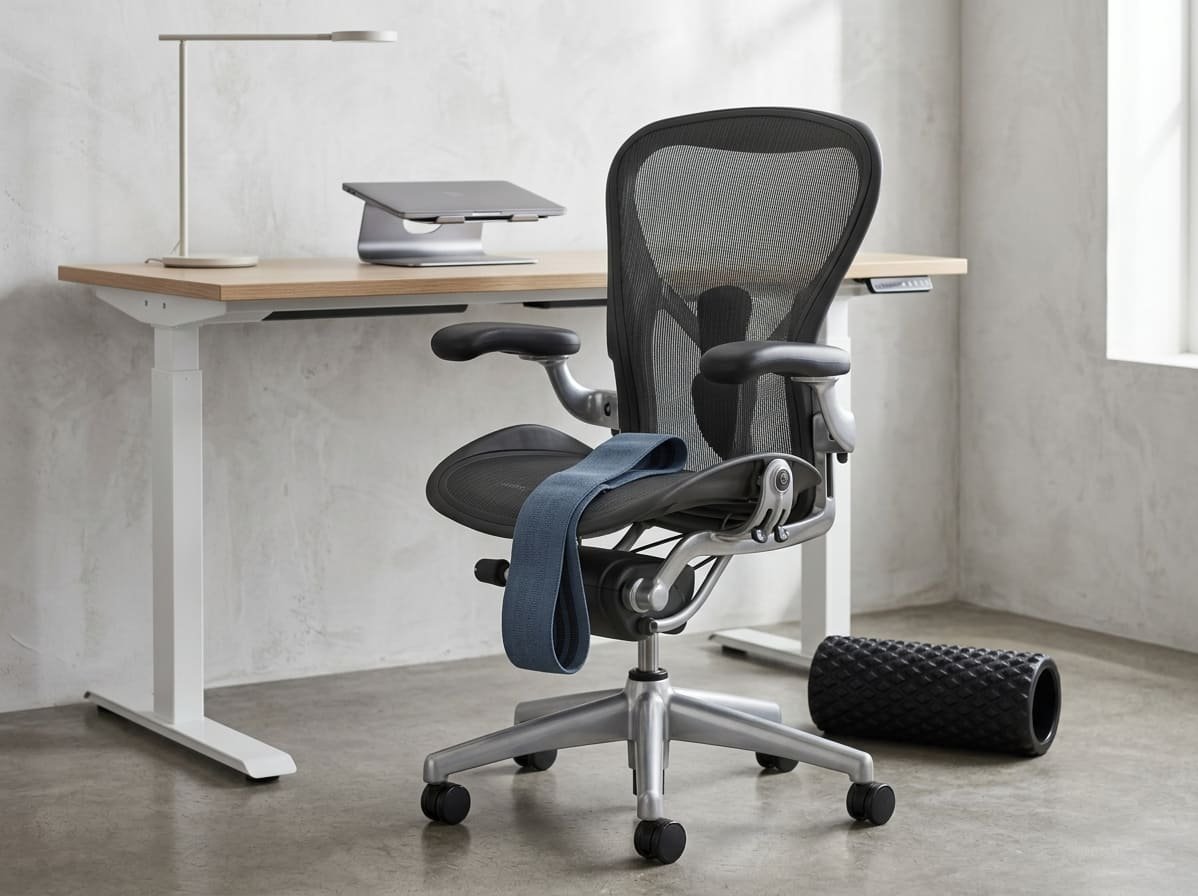
A high-grade chair acts as a crucial asset behind the scenes. Whenever extended sitting becomes mandatory, a well-designed model balances your mass, takes pressure off your buttocks, and keeps your spine aligned correctly. It makes sitting far less damaging to your body mechanics.
Features to Consider in an Ergonomic Office Chair
Finding the right office seat means searching for adjustable parts built to accommodate your individual build.
MUST-HAVE CHAIR FEATURES
| Feature | Why It Matters |
| Adjustable Height | Keeps feet resting flat on the floor to reduce thigh pressure |
| Proper Seat Depth | Prevents restriction behind knees while supporting thighs |
| Lumbar Adjustment | Preserves the natural lower spine curve |
| Flexible Recline | Allows dynamic weight shifts throughout the day |
| Adjustable Armrests | Relieves upper back and shoulder tension |
| Breathable Materials | Distributes pressure evenly while keeping you cool |
Adjustable Seat Height
Your seat level needs to change so your soles rest flat on the ground, forming a comfortable 90° angle at your knees. Daddling feet create unwanted pressure beneath your upper legs.
Appropriate Seat Depth
You want a slim 2- to 3-finger margin separating the cushion edge from the back of your knees. Seats built too deep bite into your calves and block blood flow. If it is too shallow, your thighs won’t receive enough support.
Supportive Lumbar Adjustment
Your lower back cushion ought to hug the natural curve of your spine snugly. This blocks slouching tendencies and relieves pressure building around your hips.
Flexible Recline
A chair with a smooth recline mechanism allows you to lean back naturally during phone calls or reading sessions. Changing angles relieves continuous weight pressure on your rear end.
Adjustable Armrests
Armrests should support your elbows gently at a 90° angle without pushing your shoulders up toward your ears. This reduces unnecessary strain in your upper body.
Breathable and Pressure-Distributing Materials
Mesh surfaces combined with dense supportive padding distribute body weight uniformly across the chair base. Airflow through the mesh keeps you dry and cool during long tasks.
How to Adjust Your Workstation for Better Comfort
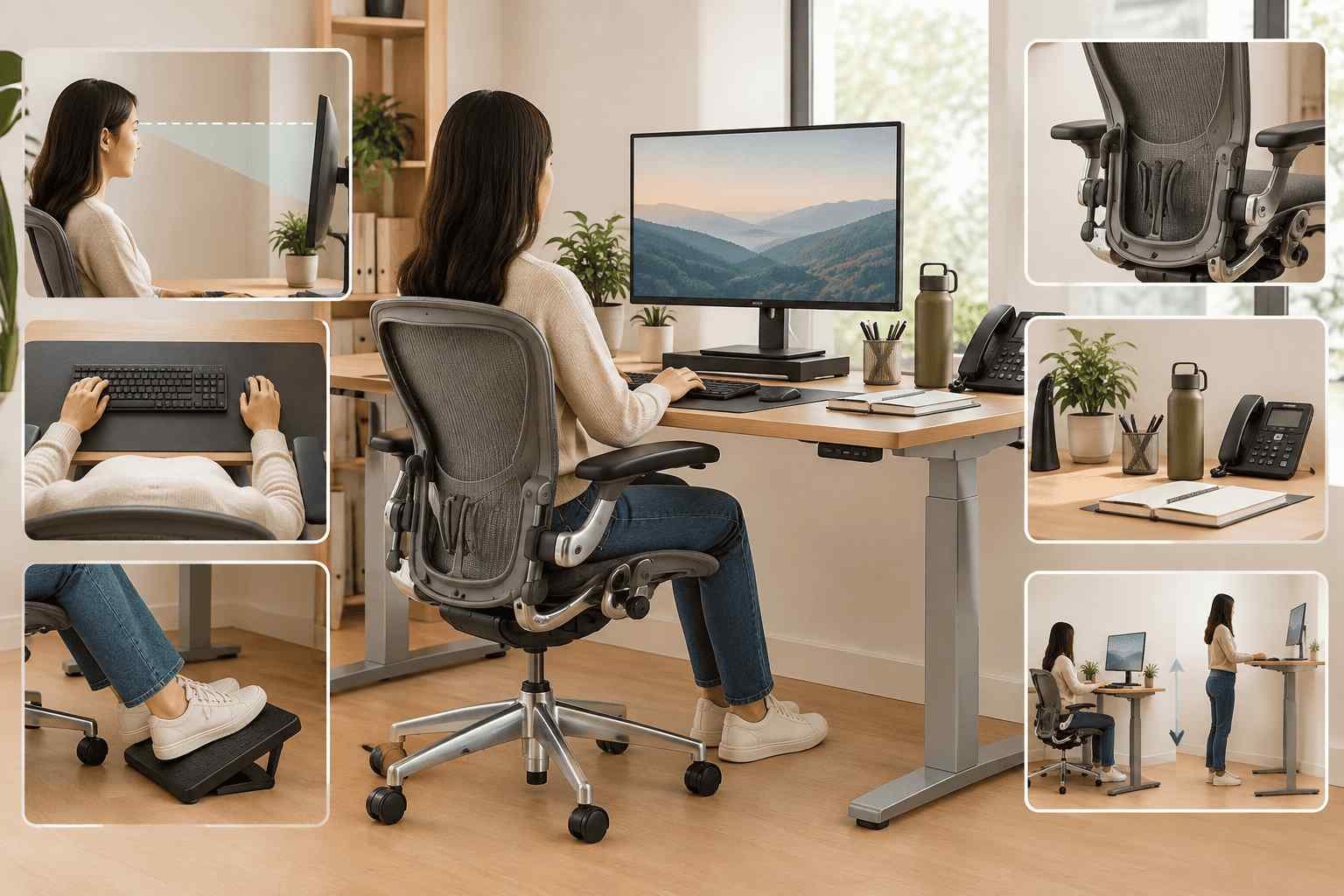
An exceptional chair loses its value if your workstation layout is completely off. Apply these adjustment steps:
- Monitor Setup: Center your screen directly in front of you, bringing the top third level with your eyes.
- Accessing Controls: Group your mouse and keyboard tightly so your arms hang naturally by your ribs.
- Foot Support: Rest your soles solidly on the floor, or add a footrest if your desk clearance is excessive.
- Initial Adjustments: Always dial in your seating position before you touch the height of your desk.
- Stop Reaching: Steer clear of awkward lunges or constant torso twisting to reach daily tools.
- Keep Items Nearby: Keep your telephone, water jug, and active paperwork tucked tightly in arm’s reach.
- Alternate Positions: Cycle between sitting and standing phases each hour when working at an adjustable desk.
Remember, your goal is to fit the workstation to your body, not force your body into a rigid setup!
When Should You Consult a Healthcare Professional?
While an office chair butt is generally a simple case of inactive muscles, serious pain should never be ignored. You should schedule a visit with a physician or physical therapist if you experience:
- Lower-body aches that hang around and refuse to ease up, even when you move.
- Hip or leg numbness, tingling, or odd “pins and needles” sensations popping up repeatedly.
- Muscle weakness severe enough to make you stumble, drag a foot, or lose your footing.
- A sharp, stabbing pain tracking down the back of your leg.
- Issues that get straight in the way of daily tasks or ruin a proper night’s sleep.
Do not brush these warnings off, as they can indicate pinched nerves, bad tendinopathy, or spinal troubles requiring a doctor’s help.
Final Thoughts
At the end of the day, office chair butt is simply a modern side effect of our desk-bound work lives rather than a permanent condition. When you stay seated for long hours of sitting, your glutes naturally go quiet. You can easily fix this, though. Walk around often, stay active, do targeted strength work, and fix up your desk. Doing all that protects your posture, kills off back pain, and keeps you feeling awesome. So get up, stretch your legs, and move!