Many people sit for a long time every day. The chair you sit on at home or at work could have long-term effects on your posture, comfort, and health.
The ergonomics of a chair aren’t only about how comfortable it is. It looks at how the body moves, how pressure is spread out, and how the body reacts to a sitting arrangement over time.
For a long time, I’ve been maintaining and updating high-end ergonomic seats. I’ve seen how the design of a chair can influence how people sit. A well-made chair supports the body in a way that feels natural. If it’s not built well, it could hurt since it makes the body work harder.
If people comprehend the science underlying ergonomic seating, they can choose seats that support their bodies well and avoid putting too much strain on them.
What Does “Ergonomics of a Chair” Really Mean?
Ergonomics is the study of how to design things and spaces so that they work well with how the body works.
The Occupational Safety and Health Administration (OSHA) claims that ergonomics is about modifying the way things are set up at work to make them safer and more pleasant.
https://www.osha.gov/ergonomics
When it comes to chairs, ergonomics looks at how the seat keeps your body in its natural position while also enabling you to move around during the day.
Most office chairs from the past weren’t particularly easy to move. Their backs were fixed, there wasn’t much room for adjustment, and the cushions were just plain foam. As research into health at work improved, chair producers began to make chairs that encourage dynamic sitting. This means that the chair moves with the body instead of staying still.
A lot of current ergonomic chairs incorporate lumbar systems, tilt mechanisms, and armrests that can be modified to match different body types.
The Biomechanics of Sitting
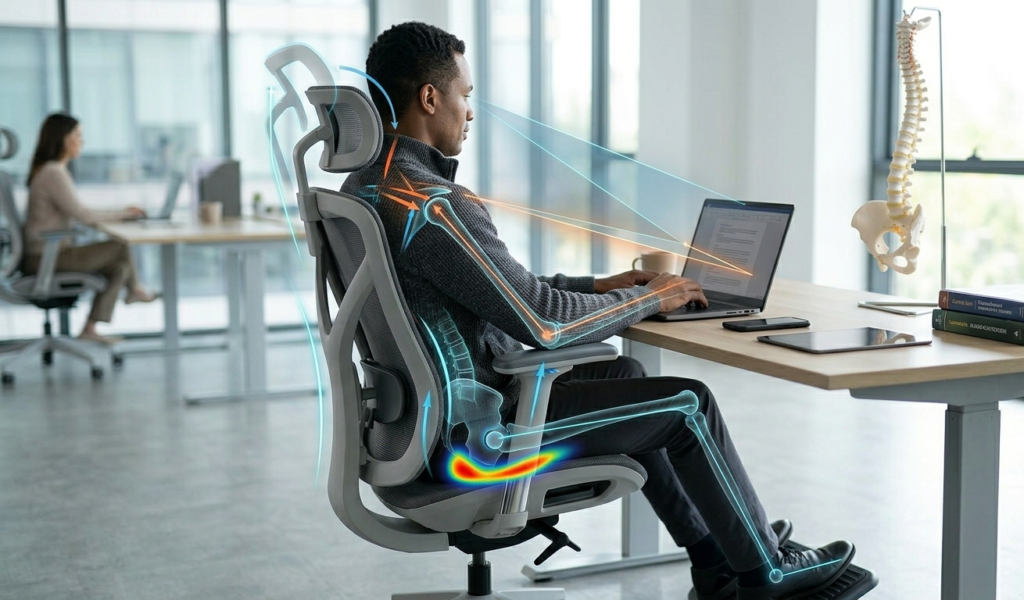
It can seem easy to sit down, but there are a number of important biomechanical factors that make it happen. The body needs to be in the appropriate position with the right amount of pressure, muscle balance, and spinal alignment to stay comfortable throughout long work sessions.
1. Spinal Alignment and Natural Curvature
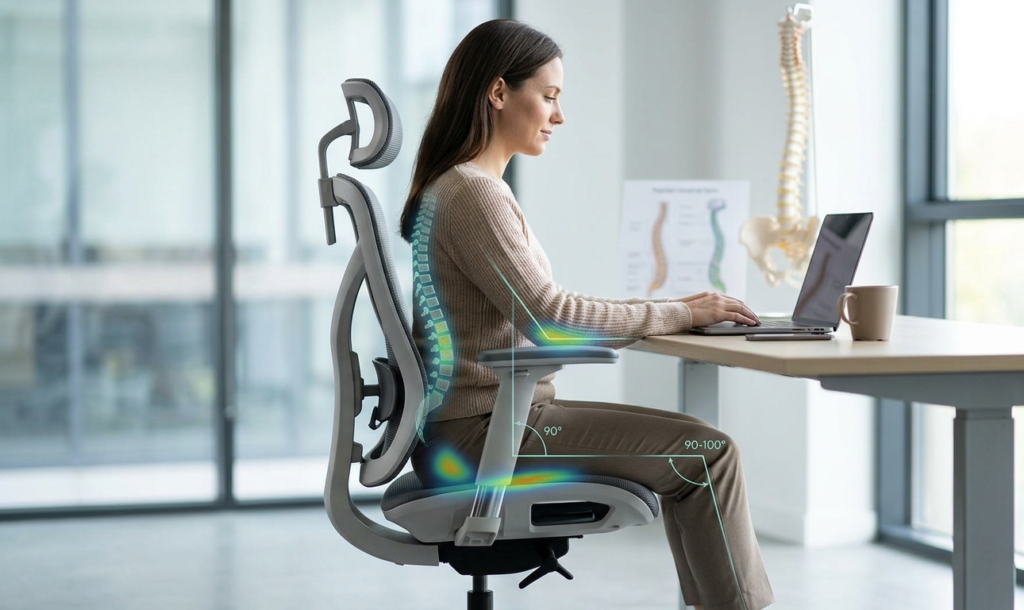
The human spine has three natural curves.
• The cervical curve in the neck
• Curvature of the thoracic spine in the upper back
• Curvature of the lumbar spine in the lower back
These curves help your spine stay straight while you sit. When a chair doesn’t fit these natural contours, the spine tends to flatten or round forward.
This could make your muscles fatigued and suffer over time.
The contour of the backrest and the positioning of the lumbar support on a well-designed ergonomic chair fit these curves.
2. Lumbar Support and Why It Matters
The science of lumbar support is one of the most important areas of ergonomic seating.
When you bend your lower back, it naturally forms a tiny curve inwards called lumbar lordosis. When this curve breaks when you’re seated, the pressure on the spinal discs gets higher.
Good lumbar support helps keep this bend in place and spreads the pressure more evenly throughout the spine.
Research on workplace ergonomics has shown that keeping lumbar support in place as you sit at a desk for long periods of time can help keep your lower back from growing fatigued.
With adjustable lumbar systems, users may put the support exactly where they need it.
3. Seat Pan Design and Pressure Distribution
The contour of the seat pan is also highly important for comfort.
A prominent feature of ergonomic chairs is the waterfall seat edge. The front of the seat curves down.
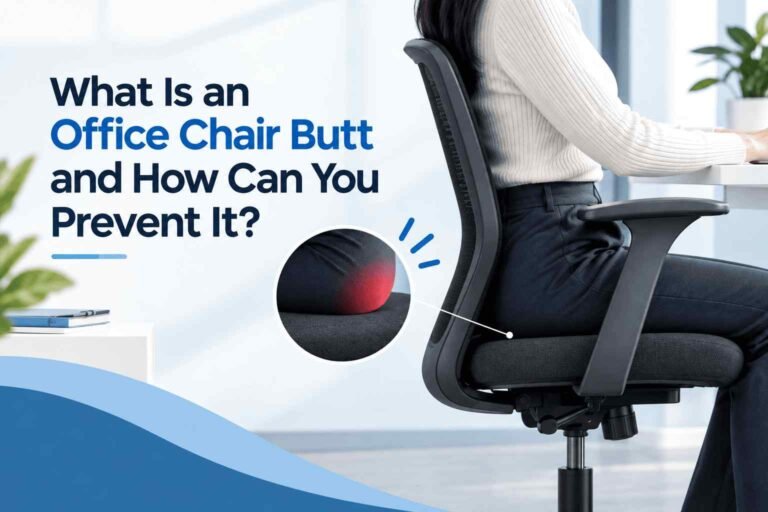
This design relieves pressure on the underside of the thighs and helps blood circulate better in the legs.
The depth of the seat pan is also very important. If the seat is too deep, it could push on the back of the knees. The thighs could not get enough support if it’s not deep enough.
The seat depth may be changed, which makes it simpler for persons of all sizes to sit comfortably and spreads the pressure out better.
4. Dynamic Sitting and Tilt Mechanics
The body wasn’t meant to stay in one place for a long time.
This is when dynamic sitting becomes very important.
Tilt systems in high-quality ergonomic chairs let the user lean back and still obtain support. Many expensive chairs include a synchronous tilt mechanism, which means that the seat and backrest move simultaneously in a way that keeps them balanced.
This practice encourages modest adjustments throughout the day, which helps blood flow and keeps muscles from getting too weary.
Manufacturers generally employ the standards developed by the Business and Institutional Furniture Manufacturers Association (BIFMA) to test these systems for durability and functionality.
https://www.bifma.org/page/BIFMAStandards
5. Armrests and Shoulder Biomechanics
Armrests are also an important feature of making seats that are good for your body.
When the armrests are in the right spot, the elbows can rest at about 90 degrees and the shoulders can stay relaxed.
When the armrests are too high, the shoulders go up, which makes the trapezius muscles tense up. If they are too low, people tend to lean forward.
Adjustable armrests help keep your shoulders in alignment and minimize the tension in your neck while you work on the computer.
You can vary the height, width, and angle of the armrests on a lot of new ergonomic chairs.
Ergonomic Standards and Certifications
Not all chairs that declare they are ergonomic have been tested for safety or how long they will last.
ANSI and BIFMA are two bodies in the office furniture business that set standards for assessing the strength, stability, and long-term performance of office furniture.
Repeated stress testing makes it seem like these requirements have been in place for years.
Chairs that pass these tests usually survive longer and work better than chairs that don’t pass these tests.
Why Cheap Chairs Fail the Science Test
Many cheap office chairs look like expensive ones, but the way they are manufactured on the inside is frequently very different.
Here are some common issues:
• not very flexible
• foam that isn’t very good and shrinks soon
• bad tilt mechanisms
• lumbar support that doesn’t work well
• frames that haven’t been tested for strength
| Feature | Premium Ergonomic Chairs | Cheap Office Chairs |
|---|---|---|
| Adjustability | Multiple adjustable features | Limited adjustments |
| Lumbar Support | Adjustable systems | Fixed or minimal |
| Tilt Mechanism | Engineered synchronous tilt | Basic recline |
| Durability | BIFMA tested frames | Often untested |
As time goes on, it becomes evident what makes them different in terms of comfort and how long they stay.
The Role of Sustainability in Ergonomic Design
Office chairs that are manufactured well will last a long time. But businesses often acquire new furniture when they move or change their offices.
Refurbishing these chairs makes them last longer and keeps usable equipment from being thrown away.
To cut down on garbage, the U.S. Environmental Protection Agency (EPA) and other groups want people to reuse and fix things.
When you fix up a commercial-grade chair, you can frequently make it last 10 to 15 years longer.
Why Refurbished Premium Chairs Deliver Better Ergonomics for Less
Expensive ergonomic chairs often include features that cheap ones don’t, such as better engineering.
Some of these things could be:
• advanced mechanisms for tilting
• adjustable lumbar support
• mesh or upholstery that lasts a long time
• frames that can hold a lot of weight
These chairs were created for businesses, so they usually stay in good shape even after years of use.
Refurbishing them allows users access to high-quality ergonomic design at a far lower cost than buying new ones.
It also comes with a warranty, which is another good thing. Reputable refurbishers evaluate the chair, repair worn-out parts, and give mechanical warranties.
Final Thoughts
There is real science behind how a chair is designed to be comfortable. How comfortable and healthy a sitting system will be over time relies on how well the spine is aligned, how pressure is spread out, and how much movement there is.
An excellent ergonomic chair keeps the spine in its natural shape, enables you to move around during the day, and can be changed to match different body types.
If you know these guidelines, you may choose a chair that will be comfortable and help you get things done for a long time.
Frequently Asked Questions
Upgrade your workspace with professionally refurbished premium ergonomic chairs.
Shop now or contact us to find your perfect fit.